
Tool and Die Manufacturing
General Stamping & Metalworks delivers tool and die manufacturing built for the pace and precision OEMs demand. Our full tool and die design/build team, including nine journeyman tool and die makers, engineers the tooling behind our customers’ product designs, enabling quick and accurate production. We move die designs to tryout fast and then feed stamping, cutting, and forming on one coordinated schedule.
Comprehensive Metal Manufacturing Solutions
We offer an extensive range of metal manufacturing capabilities, eliminating the need for multiple manufacturers.
Robust Supply Chain Support
We excel in providing enhanced supply chain stability and dedicated support for minimal disruptions.
Manage Large-Scale Projects
We offer a state-of-the-art facility equipped to tackle projects requiring large metal components.
Collaborative Engineering
Our expertise helps improve manufacturability and reduce costs.
Why OEMs Trust GSM for Tool and Die Making
GSM handles tool and die design, build, tryout, and maintenance under one roof for our customers’ product designs, so launches move fast and accountability stays clear. Our toolroom works shoulder-to-shoulder with stamping, machining, and cutting, closing feedback loops in hours, not weeks. Advantages of our tool and die making include:
- Expert team: Our journeyman tool and die makers drive projects from strip layout to first hit.
- Proven design tools: We model with SolidWorks and Logopress3 and program with MasterCam, validating clearances and stations before we cut steel.
- Tooling range: Progressive, line, and draw dies plus weld fixtures and check fixtures to lock in repeatable quality.
- Uptime focus: Die protection, standardized components, spare inserts, and documented PM keep presses running and scrap low.
- Large-format capability: We build carriers and bases for oversized panels and the heavy plate used on commercial equipment.
- Stable supply: We stage materials and hardware and use duplicate equipment to remove single-point risks.
Choose GSM as the tool and die manufacturer that delivers smart tool and die design and reliable services that keep production on pace.
Most of that tooling work is progressive. See how progressive die stamping works and what to look for in a tooling partner.

Tool and Die Manufacturing, Explained
Tool and die manufacturing engineers and builds the hardware that shapes, cuts, and forms metal with repeatable accuracy. In a stamping press, for instance, the die controls part geometry, cycle time, and edge quality. Our strong tooling decisions drive uptime and consistency across every process.
Tools vs. Dies vs. Fixtures
- Tools: cams, gauges, punches, and forms that cut, bend, locate, and protect features.
- Dies: press-ready assemblies, including progressive, line, or draw dies, that feed material, form features, and release finished parts.
- Fixtures: weld and check fixtures that locate parts for joining and verify critical dimensions.
Our complete program covers tool and die design, build, and maintenance in support of our customers’ product designs, including machining, assembly, and tryout — all work that delivers precision tool and die performance on the production floor. Well-designed and well-maintained tooling combined with our extensive capabilities extends production life, reduces downtime, lowers scrap, and keeps schedules steady for OEM builds.
In-House Team and Capacity
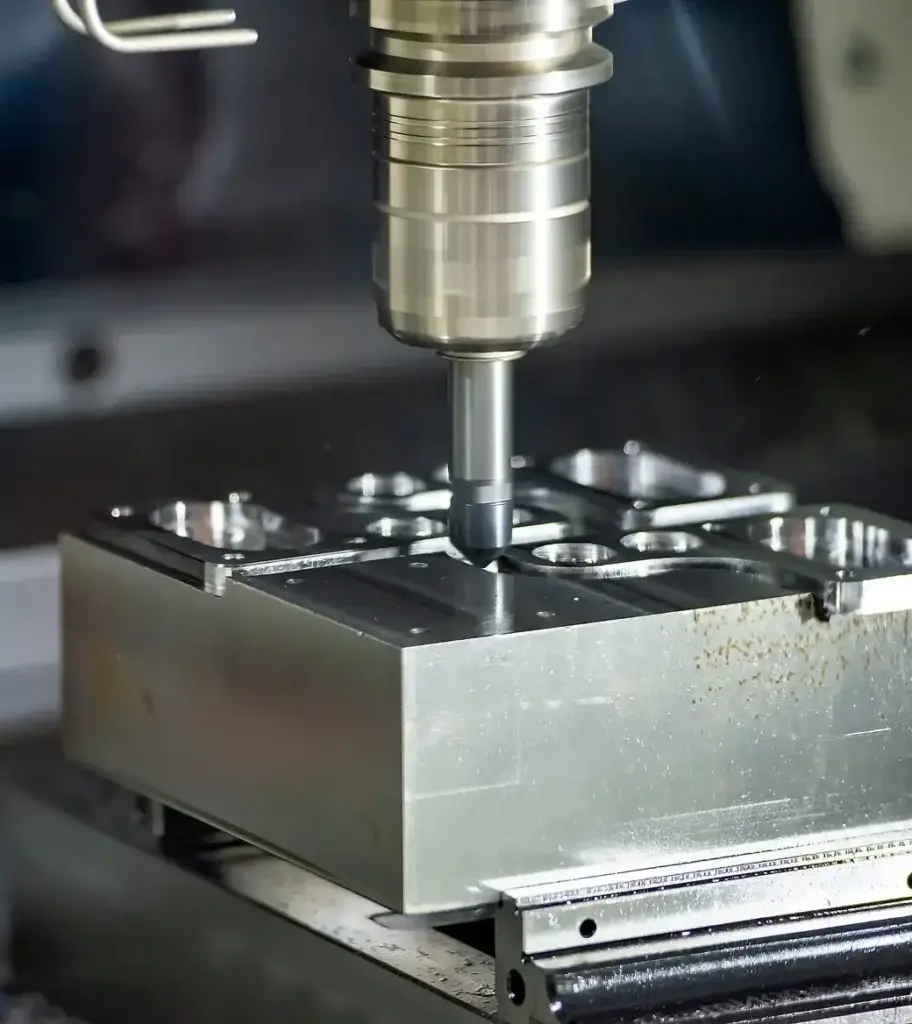
GSM runs tool and die manufacturing with a complete tool and die design/build team that moves die designs to steel fast and keeps clearances and stations tight to the print.
Capacity stays strong because we stage materials, reserve machine time, and hold tryout slots ahead of demand. If you need precision tool and die work with real throughput, our custom tool and die services deliver.
How a Die Gets Built at GSM
- Quote and DFM review. We review your print or CAD model, annual volume, and material, and flag features that drive tooling cost or risk before anything is committed.
- Strip layout and die design. Our designers develop the strip layout and full 3D die design in SolidWorks and Logopress3, validating clearances, stations, and forming before steel is ordered.
- Programming and build. Die components are programmed in MasterCam, then machined and assembled by our journeyman tool and die makers.
- In-house tryout. Every die is tried out on GSM’s own presses, up to 2,000 tons, so problems are solved in tryout instead of on your launch schedule.
- First-article approval. Sample parts are measured against your print, and dimensional results are shared for approval before production starts.
- Production support and maintenance. The same toolroom maintains the die for its whole life: preventive maintenance, spare inserts, and mid-run repairs, with a typical in-house turnaround of 4 hours.
Tool and Die Capabilities at a Glance
| Team | Full design/build department, including nine journeyman tool and die makers |
| Die types | Progressive, line, draw, and form/bend dies; single-punch and transfer tooling |
| Fixtures and other tooling | Weld fixtures, assembly fixtures, check fixtures, custom press brake tooling |
| Design and programming | SolidWorks, Logopress3, MasterCam |
| Tryout and production presses | Up to 2,000 tons, including an HMS Series 900 transfer system on the 2,000-ton press |
| New tooling lead time | 8–16 weeks, depending on die type, station count, and part geometry |
| Mid-run die maintenance | Typical in-house turnaround of 4 hours |
For more on how strip layout and station count drive die cost, see our progressive die stamping guide.
Precision Tool and Die, Built for Tight Tolerances
GSM engineers every detail that affects accuracy, including steel selection, coatings, clearances, radii, timing, and strip layout, so the die repeats on the press. We choose die materials that make sense and lock alignment with precision guides and bearings that hold position, hit after hit.
Sensors protect the die and the schedule. We integrate feed, part-out, and mis-hit detection, monitor press tonnage, and use die protection to stop issues before they mark parts. In-press adjustments and serviceable inserts keep edges sharp and features clean without pulling the tool from production.

Speed: Our Competitive Advantage
Walk the line with GSM to see our commitment to velocity and integrity in action. Watch the video to see how one coordinated floor maintains the tight schedules that OEMs depend on.
Request a Tool and Die Quote
Send us your details, and we’ll price the build and outline a clear tool and die manufacturing timeline. A part print or 3D CAD model, material and thickness, estimated annual volume, and any critical tolerances are all we need to start. If you need fixtures or updates to existing tooling, we can scope that at the same time. With all our services under one roof, you can rely on GSM for quick turnarounds and speedy production. Talk with a tooling engineer for the guidance you need. Get started now by requesting more information or a quote.
Frequently Asked Questions
Straight answers to what OEM engineering and sourcing teams ask most about our tool and die services.
Do you support prototype and production tooling?
Yes. GSM designs and builds prototype tools, bridge tooling, and full production dies engineered around our customers’ product designs, using the same engineering team and tryout resources, so you can move from first hit to volume without resets.
Can GSM repair, maintain, or modify existing tools and dies?
Yes. We evaluate condition, replace inserts, rework clearances, add sensors/die protection, and run preventative maintenance. Our team can reverse-engineer components, update tooling for new materials or presses, and manage ongoing service to keep cycle time and quality steady.
What's the typical lead time for tool and die projects?
New tooling typically takes 8–16 weeks from approved design to a production-ready die, depending on die type, station count, and part geometry. We stage materials, reserve machine time, and hold tryout slots, then publish a firm schedule with your quote. Repairs to dies already in production are typically turned around in-house in about 4 hours.
Gallery
See press-ready tooling from our floor with clean trims and true forms. Each image highlights the repeatable accuracy our tool and die manufacturing delivers, run after run, for OEM production.


