Robotic Welding Services
General Stamping & Metalworks (GSM) provides robotic welding services for OEMs from South Bend, Indiana. Our eight six-axis robotic MIG welding cells (FANUC robots with Lincoln Electric welding equipment) produce repeatable, high-volume weldments in carbon steel, stainless steel, aluminum and galvanized steel from 16 gauge to 1/2″, backed by in-house stamping, laser cutting, tube processing, machining and assembly, so parts arrive at the weld cell ready to fixture and leave ready to ship.
Comprehensive Metal Manufacturing Solutions
We offer an extensive range of metal manufacturing capabilities, eliminating the need for multiple manufacturers.
Robust Supply Chain Support
We excel in providing enhanced supply chain stability and dedicated support for minimal disruptions.
Manage Large-Scale Projects
We offer a state-of-the-art facility equipped to tackle projects requiring large metal components.
Collaborative Engineering
Our expertise helps improve manufacturability and reduce costs.
Robotic Welding Built for OEM Production
When a program runs thousands of identical weldments, consistency matters more than anything. Robotic welding holds the same torch angle, travel speed and wire feed on every part, every shift. GSM pairs that repeatability with decades of fabrication experience and a quality team that checks every weldment against your print.
What Is Robotic Welding?
Robotic welding is an automated process in which a programmed industrial robot moves the welding torch along a set path, producing the same weld on every part. It is best suited to medium- and high-volume production where weld consistency, cycle time and cost per part matter. At GSM, robotic cells handle repeat production, while our certified welders handle prototypes and intricate work.
Robotic MIG Welding Services
Our automated MIG (GMAW) cells deliver strong, consistent welds on carbon steel, stainless steel, aluminum and galvanized steel from 16 gauge to 1/2″ at production speed. GSM runs three dual-arm and five single-arm six-axis cells. In-house fixturing locates every part the same way, so the robot path stays accurate from the first piece to the last.
Robotic vs. Manual Welding
Robotic welding wins on repeat parts, high volumes and long weld seams. Manual welding wins on prototypes, low volumes, tight access and specialty alloys. GSM runs both, so each part goes to the right process. See our manual welding services for MIG and TIG work by AWS-certified welders.

The GSM Approach to Robotic Welding
Robotic welding only pays off when the parts going into the cell are consistent. Because GSM cuts, forms and stamps the components in-house, every part fits the fixture the first time. We partner with OEMs early to review joint design and fixturing, so each weldment is built for automated production without inflating the budget. All of it happens under one roof, with no outsourcing or handoffs.
AWS-Certified Welders and Weld Inspection
Robots do not replace weld expertise; they depend on it. In 2019, 30 members of GSM’s welding team earned American Welding Society (AWS) certification, and a certified weld inspector on our quality team checks robotic weldments against the requirements on your print.
Robotic Welding Cells, Fixtures and Weldments
Fixturing is what makes robotic welding repeatable. GSM designs fixtures in-house and feeds the cells with parts from our own lasers, press brakes and presses, so the same quality plan follows each part through every step. If your current supplier welds parts cut somewhere else, every tolerance conversation has three companies in it. Here it has one.
Our Robotic Welding Capabilities
GSM runs eight six-axis robotic welding cells, three dual-arm and five single-arm, for repeat production programs, and manual welding for complex, one-off builds, on floors that support everything from small assemblies to weldments over 15 feet.
| Capability | Details |
|---|---|
| Process | Robotic MIG (GMAW) welding |
| Robotic Cells (Dual Arm) | 3 dual-arm, six-axis robotic welding cells |
| Robotic Cells (Single Arm) | 5 single-arm, six-axis robotic welding cells |
| Robots / controllers | FANUC / Lincoln Electric |
| Max part size (robotic cells) | 2032 mm × 1800 mm × 1200 mm (80.0" × 70.9" × 47.2") |
| Materials | Carbon steel, stainless steel, aluminum and galvanized steel Reflective materials (copper) quoted separately |
| Thickness range | 16 gauge to 1/2" |
| Fixturing | Designed and built in-house |
| Inspection | Visual, dimensional and nondestructive testing; certified weld inspector |
| Certifications | ISO 9001:2015 certified quality system; AWS-certified welding team; certified weld inspector |
| Related in-house services | Metal stamping, laser cutting, tube processing, machining, finishing, assembly |
Solving Supply Chain Challenges with Smart Manufacturing
Your production depends on timing, and timing depends on your partners. GSM combines robotic welding with stamping, laser cutting, tube processing, machining and assembly to streamline your program. Redundant equipment and experienced operators keep production on track through market swings, so you get fewer delays, fewer handoffs and less risk.

Why OEMs Choose GSM for Robotic Welding
OEMs choose GSM because robotic welding is one part of a complete production system, not a stand-alone service.
- Repeatable quality – Robotic cells and in-house fixtures produce the same weld on every part.
- Parts made to fit – We cut, form and stamp components in-house, so they fixture correctly in the cell.
- Robotic and manual under one roof – Production runs on robots; prototypes and intricate work go to certified welders.
- Supply chain stability – Redundant equipment and in-house processes absorb volatility in your schedule.
- A true production partner – From one weldment to a full manufacturing program, we align with your priorities.
A Competitive Advantage
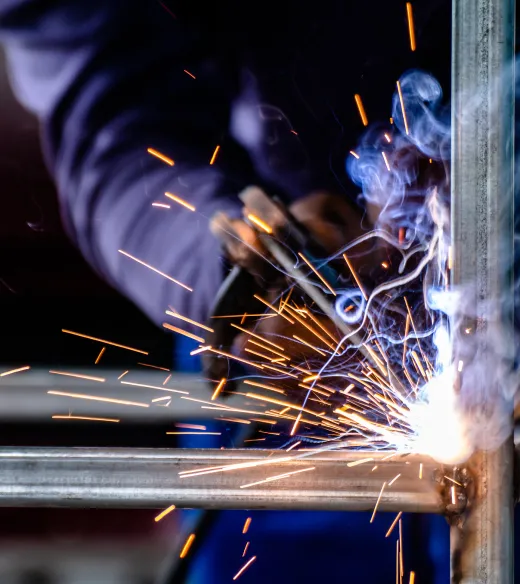
See GSM’s welding team and cells in action, and why leading OEMs trust us with their biggest production programs.
Let Us Help You Build Something That Lasts
If your program needs robotic welding at production volume, backed by stamping, cutting, machining and assembly from one partner, GSM is ready to help. Connect with our experts or request a quote today.
Robotic Welding FAQs
Answers to common questions OEMs ask about GSM’s robotic welding services.
What parts are a good fit for robotic welding?
Parts with repeatable geometry, consistent fit-up and medium to long weld seams are the best fit: brackets, frames, enclosures and structural subassemblies in carbon steel, stainless steel, aluminum or galvanized steel from 16 gauge to 1/2″. Prototypes and parts with tight access are usually better welded manually.
What production volumes make robotic welding cost-effective?
Robotic welding pays off on repeat programs where fixturing and programming costs are spread across many parts. For lower volumes, our certified welders can produce parts manually and move them to a robotic cell as volumes grow.
Can GSM inspect, machine and assemble robotic weldments in-house?
Yes. Robotic weldments are checked by our quality team with visual, dimensional and, when required, nondestructive testing. In-house machining, finishing and assembly then complete the part without extra vendors.
Robotic Welding Gallery
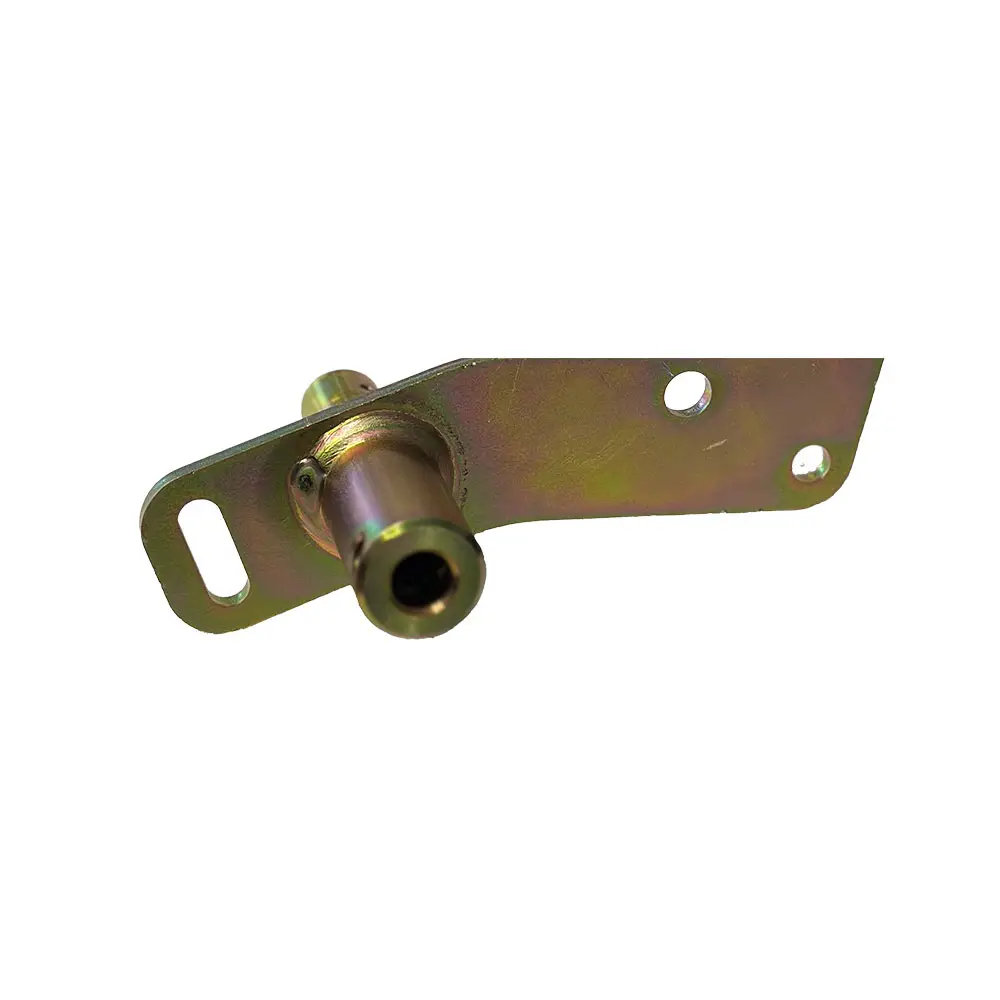
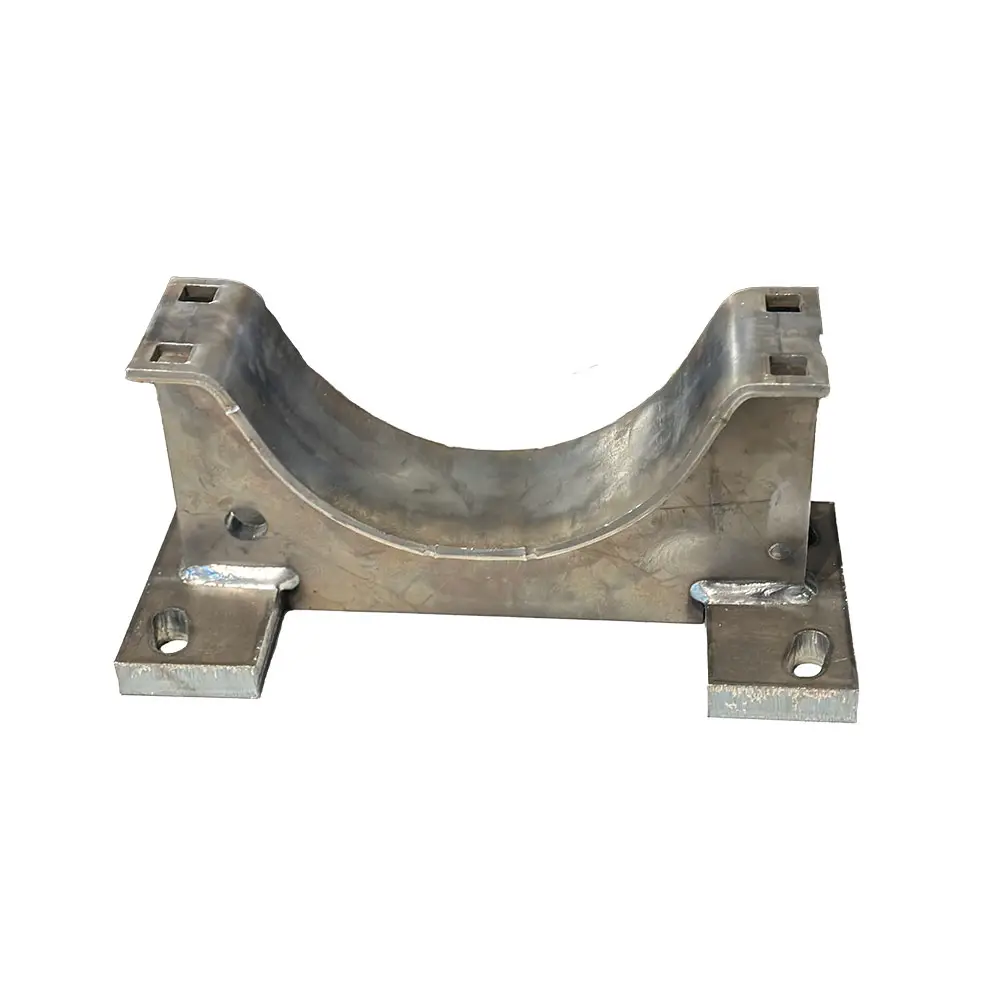
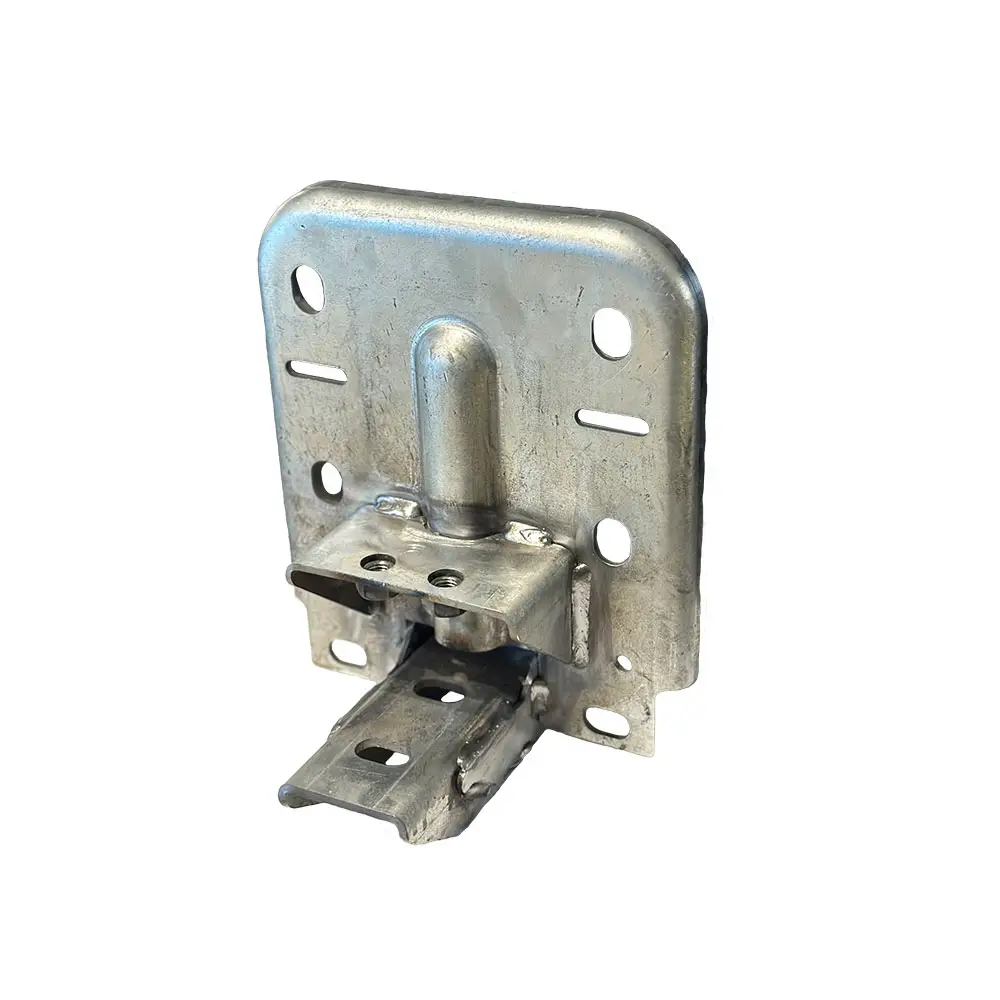
Examples of GSM’s robotic and production welding work: clean, consistent welds and assemblies that match the print.