Stamped metal parts are everywhere in the equipment you build — even when nobody on your team calls them “stamped.” Brackets, clamps, panels, chassis members, mounting hardware, enclosure shells: if it’s a formed sheet-metal or coil-metal part made in volume, there’s a good chance it’s a candidate for stamping instead of laser cutting, machining, or hand fabrication.
The question we hear most from engineers and sourcing teams isn’t “what is metal stamping” — it’s can this specific part be stamped, and does it make sense at my volume? This guide walks through what makes a part a good stamping candidate, tours real stamped metal part types across the industries GSM serves, and covers the size and precision range our presses can handle — from a part that fits in your palm to one that stretches over 15 feet.
What Makes a Good Stamping Candidate
Not every part belongs on a stamping press. Three factors decide fit:
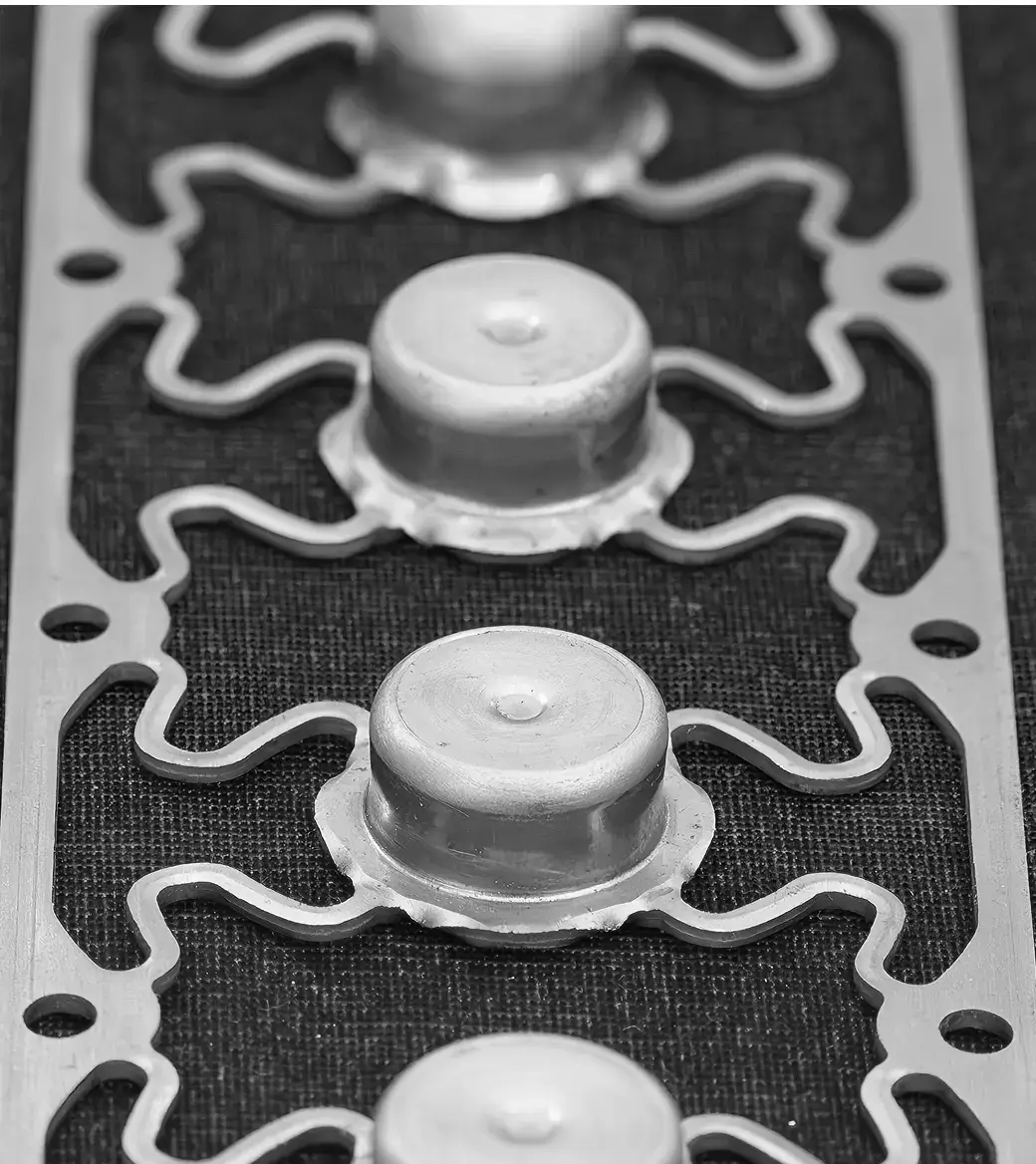
Geometry. Stamping excels at flat and formed sheet-metal shapes — brackets, flanges, channels, clamps, covers, enclosure panels — produced from a die that repeats the same geometry every cycle. Parts with simple, repeatable bends and consistent wall thickness are ideal. Deep-drawn or highly three-dimensional shapes are possible too, but they call for more tooling development up front.
Material. GSM stamps carbon steel, stainless steel, galvanized steel, aluminum alloys, copper, and ZAM, in thicknesses from thin-gauge sheet up to 1/4″–1/2″ material, including Grade 80. If your part is currently laser-cut or machined from one of these materials and produced in any real quantity, it’s worth a stamping conversation.
Volume. This is usually the deciding factor. Progressive die tooling pays for itself fastest above roughly 50,000 units/year, but transfer die and short-run stamping setups bring the economics down for lower-volume programs too. (For a deeper look at where the volume line falls, see our low-volume vs. high-volume stamping guide.)
If a part checks two of these three boxes — repeatable geometry and the right material, even at moderate volume — it’s worth a design-for-manufacturability (DFM) review before you commit to another process.
A Tour of Stamped Metal Parts, by Industry
GSM stamps parts across ten manufacturing verticals. Here’s what stamped metal parts actually look like in each.
Automotive
Automotive is one of the clearest examples of stamped parts at scale. GSM’s automotive work includes progressive die metal stamping for brackets, covers, and structural components, HSLA (high-strength, low-alloy) steel stamping for lightweight and high-strength applications, and structural bumper and subframe components, plus welded tube members for bumpers and front clips. Programs run from passenger vehicles to heavy trucks and off-highway equipment, for OEMs and Tier 1/Tier 2 suppliers alike.
Solar & Energy Storage
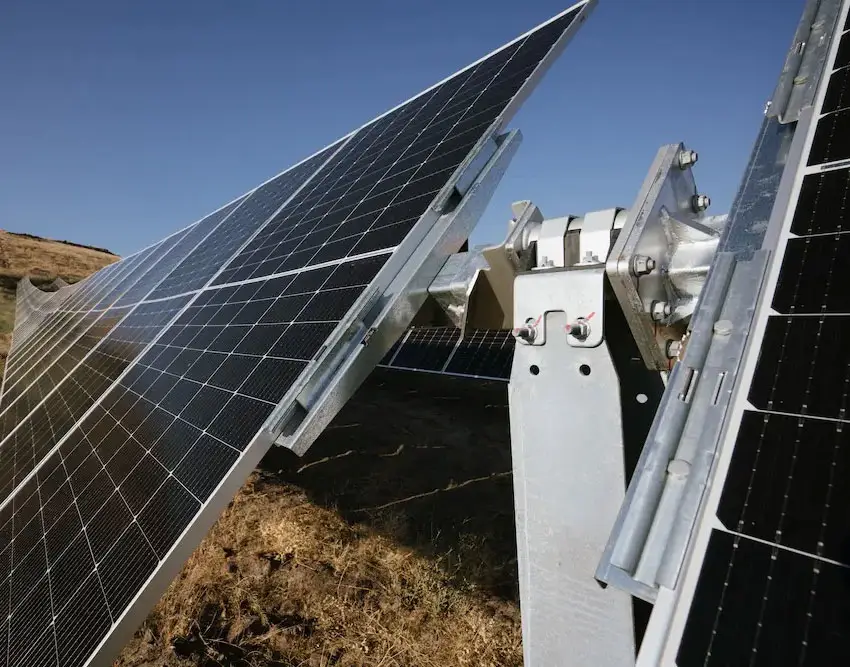
Solar racking and energy storage hardware depends on stamped parts that hold up outdoors for decades. GSM produces stamped clamps, couplers, and structural mounting systems for solar arrays, alongside robotically welded torque tubes and ground structural tubing. These are exactly the kind of high-repetition, weather-exposed brackets and clamps that make sense for progressive die stamping — GSM brings 15+ years of solar manufacturing experience to this vertical.
Agriculture Equipment
Ag equipment runs stamped formed steps, cleats, and platforms, along with tight-tolerance brackets and dash panel inserts built to survive vibration, dirt, and heavy-duty duty cycles across combines, tractors, sprayers, and grain equipment.
Construction Equipment
Construction equipment manufacturers rely on stamped engine and cooling mounting brackets, formed steps, cleats, and platforms, and structural mounting plates engineered for durability under load and repeated impact, sized from small brackets to heavy structural components.
Data Centers
Data center infrastructure uses stamped brackets, panels, floor grates, and cooling panels, plus broader enclosure and cabinet components, built to precise tolerances for rack, raised-floor, and cabling systems.
Material Handling
Material handling equipment — lift trucks, conveyors, racking — depends on stamped battery trays, frame members, and cross-truck beams, plus brackets and mounts, precision-stamped from plate and coil steel to hold tight tolerances under constant load cycling.
Military & Defense
Military and defense programs call for stamped tight-tolerance brackets, housings, and structural components for specialized vehicles and equipment, produced under the ITAR and CMMC requirements these programs carry. Every stamped part carries the same documentation discipline as the rest of a defense program — control plans, capability studies, and inspection records.
Outdoor Power Equipment (OPE)
Outdoor power equipment — zero-turn mowers, riding tractors, snow blowers, commercial sprayers — uses stamped guards, brackets, covers, and enclosures, plus castor forks, hubs, and tube handles, produced at the volumes typical of consumer and commercial equipment manufacturing.
Recreational Vehicles (RV)
RV manufacturers use stamped slide-out pin boxes, subframes, structural supports, and brackets sized for everything from towable trailers to Class A motorhomes — built to hold tight tolerances while still meeting the cosmetic standards RV customers expect.
Steel Cabinetry & Enclosures
Enclosure manufacturers depend on stamped panels and doors for battery boxes, control panels, and server cabinets, plus vented grates, louvers, and structural brackets, built to consistent tolerances for electrical, industrial, and equipment housings.
Size and Precision — From Palm-Sized to 15+ Feet
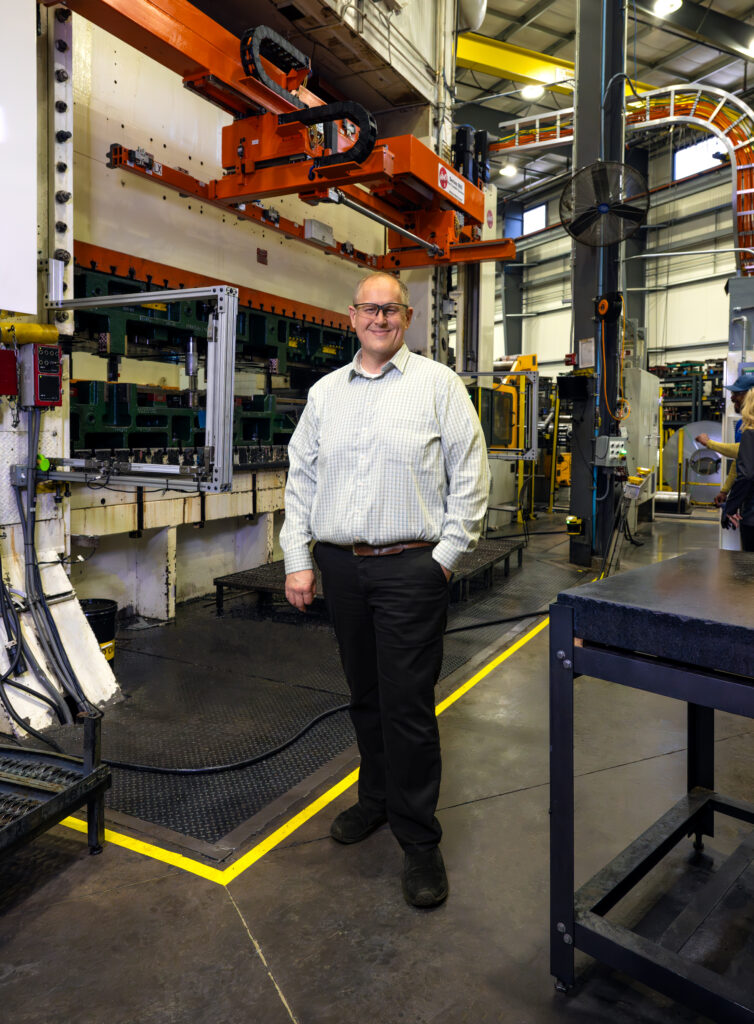
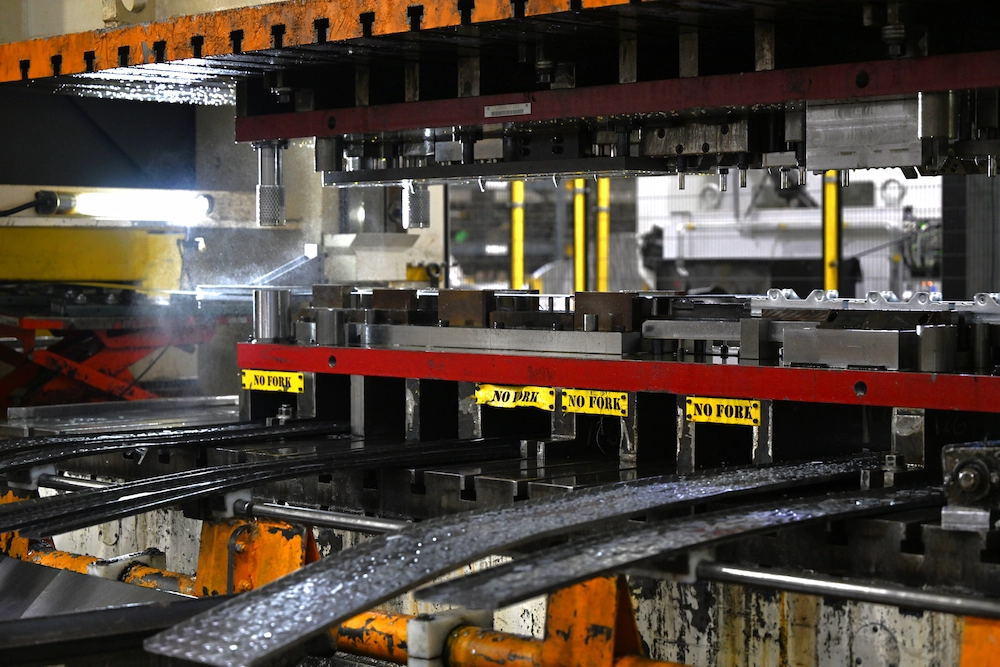
One reason GSM supports this many industries from a single stamping operation is capability range. Our presses run up to 2,000 tons, on coil-fed lines set up for progressive die, transfer die, and deep draw stamping. That capacity covers everything from tight-tolerance parts that fit in your palm to oversized components that stretch over 15 feet — including thick, 1/2″ formed parts and large panel assemblies.
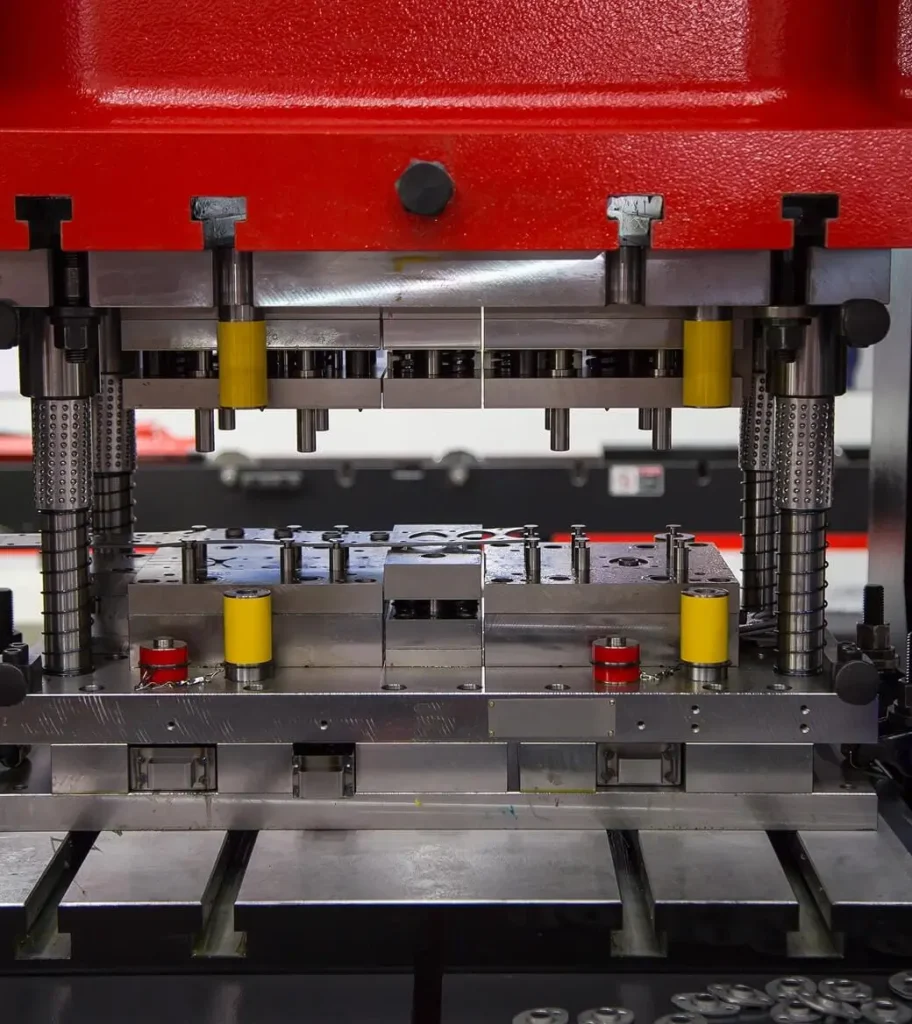
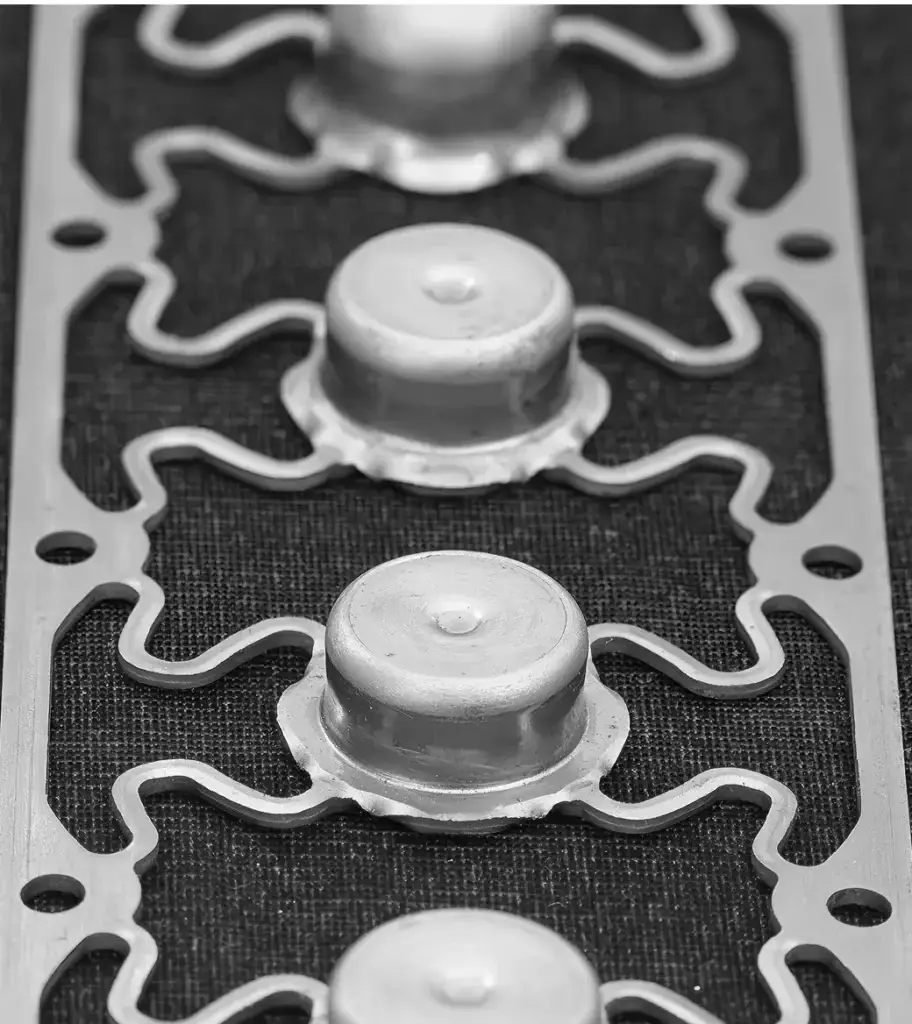
Tolerances scale to the part: ±0.10mm standard, tightening to ±0.05mm on critical dimensions where the application demands it (precision achievable depends on material and geometry). Progressive stamping lines run 14–25 pieces per minute, with progressive die setups capable of 800–1,100 parts per hour — around 17,000 parts per day — once tooling is running in production.
From Part Print to Production
Getting a new stamped part into production isn’t a one-step handoff. GSM’s process runs through:
- DFM review. We look at your print for stamping-friendly geometry — radii, wall thickness, hole placement relative to bends — and flag anything that would drive up tooling cost or cycle time before you’re committed to a design.
- Tooling. In-house tool and die work means design, build, and tryout happen under one roof, with faster iteration when a die needs adjustment.
- Sampling. First-article samples come off the press for your approval, with dimensional data tied to your print and tolerance callouts.
- Production. Once samples are approved, the part moves into full production runs — progressive, transfer, or deep draw, matched to your volume and geometry.
That’s the full breadth of GSM’s custom metal stamping capability — everything from first print review through production tooling and running parts.
One Fewer Supplier: Kitted, Ready-to-Install Stamped Parts
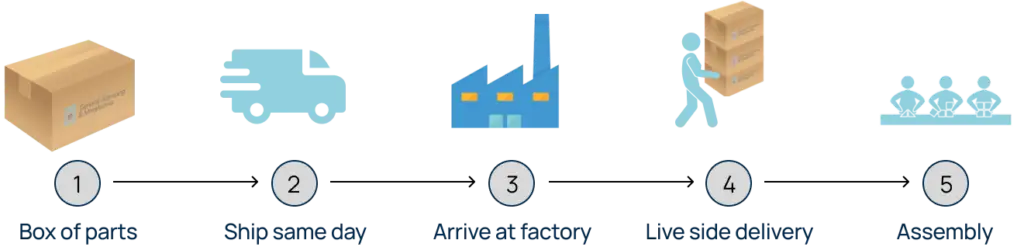
A stamped bracket rarely ships alone in a real production line. Most of the parts above get welded, finished, and assembled with fasteners, hardware, or sub-components before they reach your line. GSM’s kitting and assembly capability means stamped parts can leave our dock as kitted, line-side-ready assemblies — not loose parts you still have to sort, sub-assemble, and stage yourself. That’s one fewer supplier relationship, and one fewer place for a shipment to go wrong before it reaches your line.
FAQ
What’s the smallest and largest part GSM can stamp?
GSM’s stamping capability spans tight-tolerance parts that fit in your palm up to oversized components that stretch over 15 feet, including thick 1/2″ formed parts.
How complex can a stamped metal part be?
A single stamping operation can combine multiple features — punching, bending, coining, blanking, embossing, and flanging — in one die, so a part that once needed several secondary operations often comes off the press already finished. Progressive die tooling is built specifically to sequence these features in one continuous run.
Does tighter tolerance mean higher cost?
Not necessarily — cost is driven more by which specific dimensions are called out as critical and how the tooling is built to hold them than by tolerance alone. That’s part of what a DFM review is for: flagging which callouts actually drive tooling cost so you’re not paying for precision you don’t need.
Do you help figure out if my part is a good fit for stamping?
Yes — every quote starts with a DFM review of your print, so you know whether stamping is the right process (and the right volume) before tooling begins.
Get a Quote for Your Stamped Metal Parts
Have a part print in hand? Send it over and GSM’s engineering team will tell you whether it’s a stamping candidate, what tooling and volume make sense, and what production would look like. Request a quote to get started.