To choose a metal stamping company, evaluate eight factors: press capacity and tonnage, in-house tool and die capability, quality certifications, engineering and DFM (Design for Manufacturability) support, financial stability and longevity, capacity headroom, secondary operations and kitting, and communication. Get these right and you reduce the two risks that matter most in a stamping relationship: missed launch dates and inconsistent quality at volume.
Sourcing a stamping partner is a longer-term decision than most capital equipment purchases. Tooling is expensive, qualification takes months, and switching suppliers mid-program is disruptive and costly. That makes the vetting process worth doing carefully, before a purchase order — not after a missed ship date.


 GSM has operated continuously since 1922 — 104 years of stamping and metalworking through multiple economic cycles. That history is the foundation of GSM’s Protect Your Brand™ positioning: when parts ship late or fail in the field, it’s the OEM’s brand that absorbs the damage, not the supplier’s. A stamping partner’s own stability is one of the few due-diligence items an OEM can check before committing tooling dollars, and it’s worth checking as carefully as press specs.
What Metal Stamping Companies Actually Do
“Metal stamping company” covers a wider range of businesses than the term suggests. Before comparing quotes, it helps to know which model you’re actually evaluating.Contract (custom) stampers
A contract stamper — sometimes called a custom or job-shop stamper — owns its own presses, dies, and engineering staff, and manufactures parts to an OEM’s print. GSM is a contract stamper: work is quoted, engineered, tooled, and run under one roof, with one point of accountability for the part.Captive / in-house stamping shops
Some large OEMs run their own stamping operations internally — a captive shop dedicated to that OEM’s own production. These aren’t typically available to outside buyers; they’re worth knowing about mainly as a comparison point when you’re deciding whether to make a part in-house or source it out.Manufacturing networks and brokers
A newer model, exemplified by platforms like Xometry, aggregates a network of independent shops behind a single quoting interface. The buyer transacts with the platform; the platform routes the job to one of its network partners. This model can be fast for quoting and useful for spreading unpredictable volume across many shops. It also means the buyer typically isn’t dealing directly with the floor that makes the part — every handoff between the buyer, the platform, and the producing shop adds a layer of coordination that a direct relationship with the manufacturer doesn’t have. None of these models is universally “right.” A buyer running high, steady annual volume with tight tolerances and a long program life has different needs than one running occasional prototype or bridge-tooling work. Match the model to the program, not the other way around.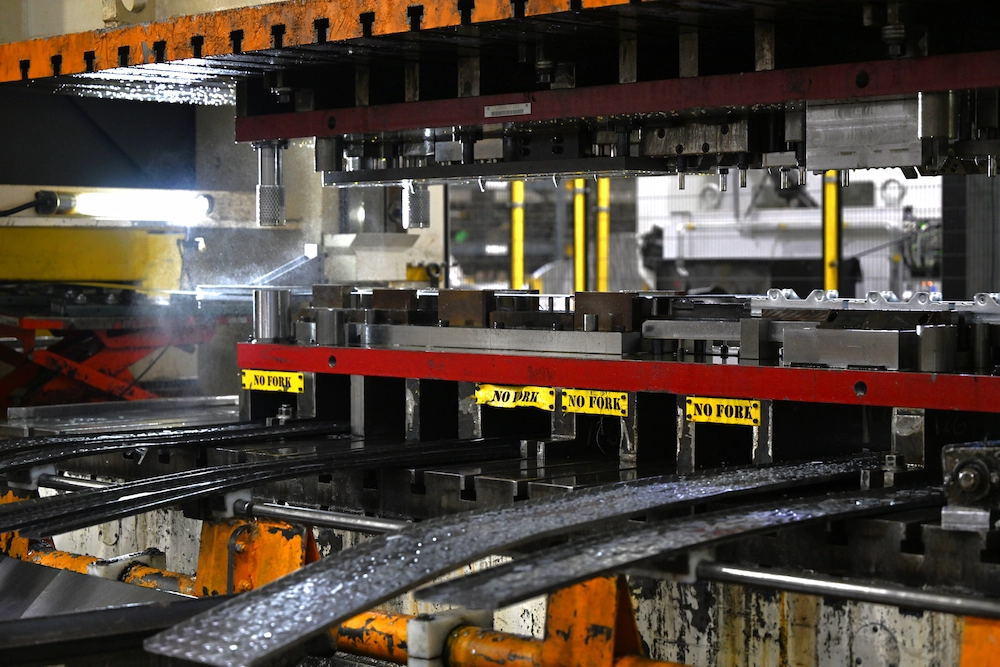
The Metal Stamping Company Evaluation Checklist
Once you know what kind of stamping company you’re looking at, evaluate it against the same criteria every OEM sourcing team should be checking — whether you’re comparing a single local shop or the largest metal stamping companies in the country.1. Press capacity and tonnage
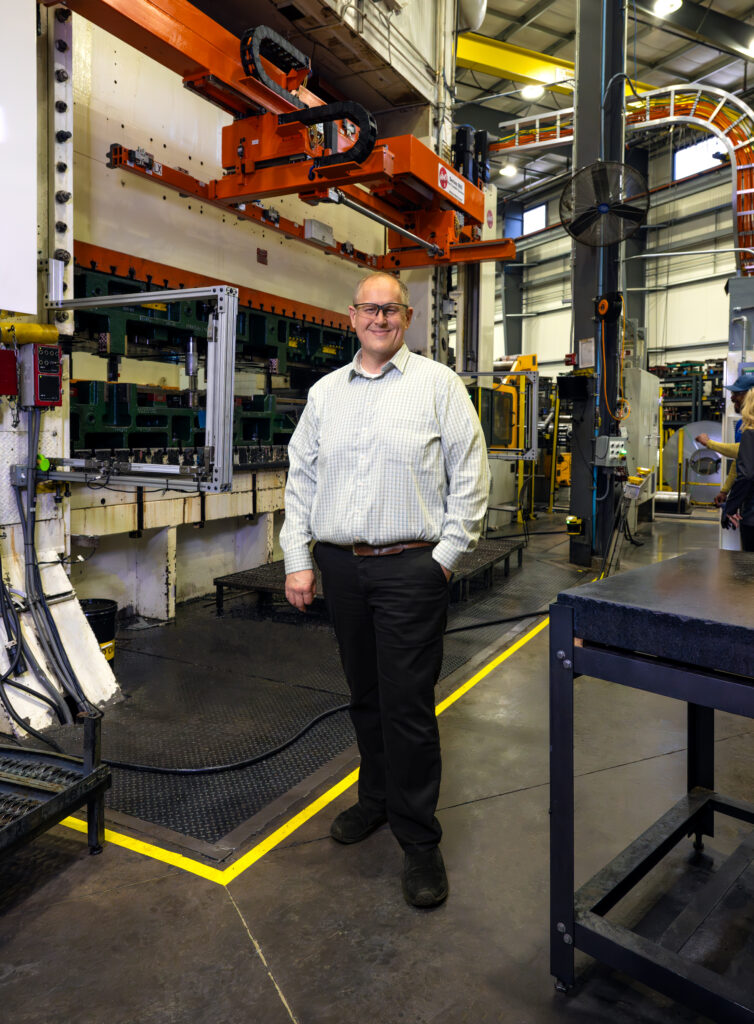
Ask for the actual press list: tonnage range, bed size, and whether the shop runs coil-fed progressive and transfer die systems, not just single-hit presses. A stamper quoting your part on a 2,000-ton press has headroom your part will likely never need elsewhere in its line; a stamper without it may struggle as your part, or your volume, grows.2. In-house tool and die
Ask whether tooling is designed, built, and maintained in-house or outsourced. In-house tool and die means design changes, tryout, and maintenance happen on the same site as production — which shortens the feedback loop from weeks to hours when a die needs an adjustment mid-run.
3. Certifications and documented quality systems
Ask what quality system actually backs the part, not just a claim on a website: which PPAP levels the shop supports, whether process capability studies (Cpk/Ppk) are run, and whether a control plan exists for every production part. GSM supports PPAP Levels 1–3, process capability studies, and control plans on every production part — ask to see a sample of that documentation, not just hear that it exists.4. Engineering and DFM support
A stamping partner that reviews your print for manufacturability before you commit to tooling can catch problems — tight radii, thin walls, awkward strip layout — while they’re still cheap to fix. Ask how DFM feedback is delivered and how fast.5. Financial stability and longevity
A supplier that isn’t financially stable is a supply-chain risk no quality system can offset. Ask how long the company has operated, under what ownership structure, and whether it has weathered prior downturns without disruption to customers.6. Capacity headroom
Ask what share of press capacity is already committed. A shop running near full utilization has little room to absorb your ramp-up, a rush order, or a second program down the road.7. Secondary operations and kitting
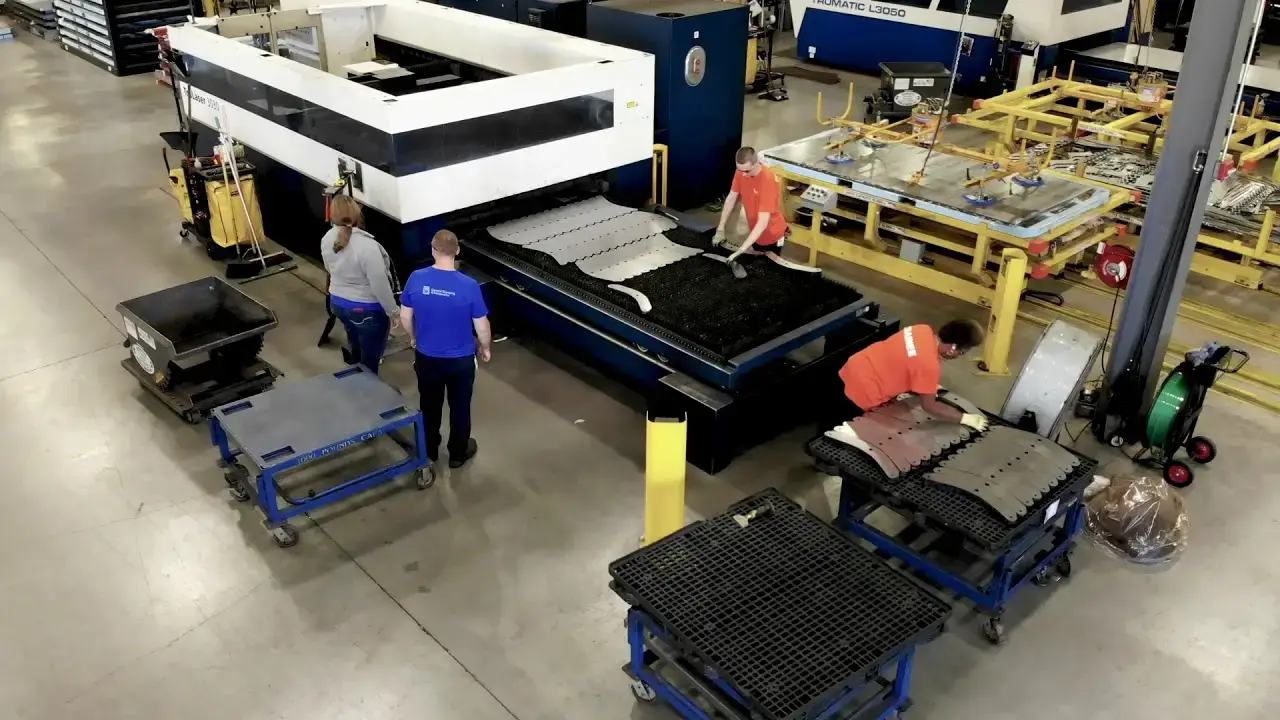
Ask whether the stamper can also finish, plate, and kit parts into sub-assemblies, or whether you’ll need to manage a second and third supplier for those steps. Every additional supplier in the chain is another point of freight cost, lead time, and quality risk.8. Communication
Ask who your day-to-day contact will be and how program issues get escalated. A stamper that’s hard to reach during a normal week will be harder to reach during a problem.Why Longevity Matters
Longevity is more than a nice biography — it’s a proxy for risk. A stamping company that has operated continuously for decades has priced through recessions, weathered material shortages, and kept commitments to customers when it would have been easier not to. That track record is difficult to fake and difficult for a newer competitor to match on price alone. GSM has operated continuously since 1922 — 104 years of stamping and metalworking through multiple economic cycles. That history is the foundation of GSM’s Protect Your Brand™ positioning: when parts ship late or fail in the field, it’s the OEM’s brand that absorbs the damage, not the supplier’s. A stamping partner’s own stability is one of the few due-diligence items an OEM can check before committing tooling dollars, and it’s worth checking as carefully as press specs.
The Reshoring Question: Why Domestic Sourcing Is Back on the Agenda
Domestic metal stamping services have moved back onto procurement agendas after years of offshore-by-default sourcing. A few forces are driving it:- Tariff exposure. Tariffs on imported steel, aluminum, and finished stampings change the landed-cost math that once favored offshore sourcing.
- Freight cost and volatility. Ocean freight rates and transit times have proven far less predictable than they were a decade ago, and an overseas stamping supplier weeks away by container ship can’t respond to a schedule change the way a domestic partner can.
- IP and quality control. Tooling and prints are among an OEM’s most sensitive assets; keeping them with a domestic partner, under one roof with direct oversight, reduces exposure compared with tooling sent overseas.
- Lead-time risk. A domestic metal stamping manufacturer can turn around engineering changes, rush orders, and die repairs in days, not the weeks that ocean freight and time-zone gaps add to an offshore relationship.
Questions to Ask in Your RFQ
Send these questions to every metal stamping supplier on your bid list, and compare the answers as carefully as the price:- What is your current press list (tonnage, bed size, feed type), and which press would run this part?
- Is tooling designed, built, and maintained in-house, or outsourced?
- What quality systems do you run — PPAP level, capability studies, control plans — and can you show sample documentation?
- What is your standard DFM turnaround, and is it free?
- How long has your company operated under its current ownership?
- What percentage of your press capacity is committed today?
- Can you provide secondary finishing and kitting, or will additional suppliers be needed?
- Who is our day-to-day contact once the program is running?
Red Flags When Sourcing a Metal Stamping Company
- Won’t share a current, verifiable quality documentation sample or an actual press list.
- Outsources all tooling and can’t explain who owns die maintenance once you’re in production.
- Vague or evasive about how long the company has operated or under what ownership.
- Can’t say how much press capacity is already committed.
- No named day-to-day contact — every question routes through a general inbox.
- Quotes a piece price with no mention of tooling cost, tooling ownership, or lead time.